
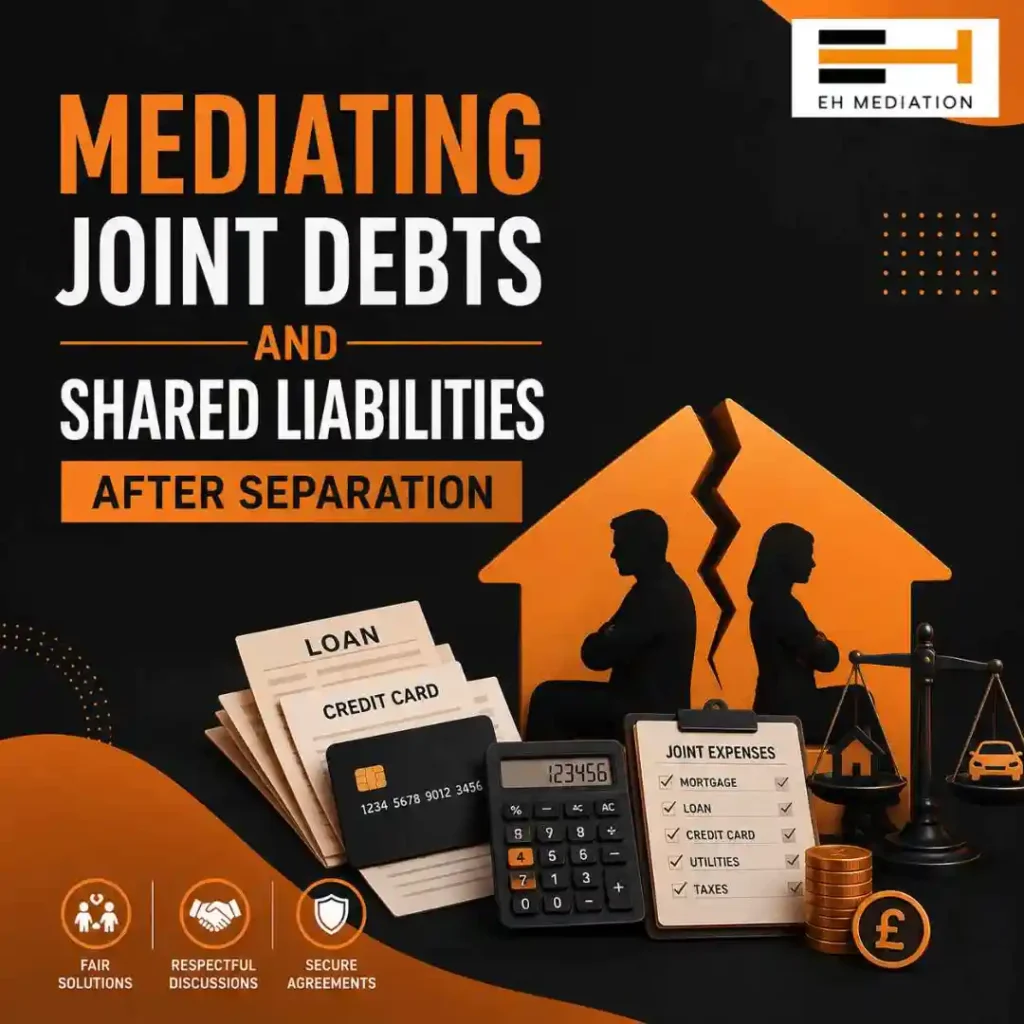
Money is often one of the hardest things to sort out when a relationship ends. Even when both people agree that separating is the right decision, dealing with mortgages, loans, credit cards, and household bills can quickly become a source of worry and disagreement.
Many separating couples are unsure about what happens next. They may have questions such as:
- Who should continue paying the mortgage Gloucester?
- What happens if one person cannot afford their share of the bills?
- Should debts be divided equally?
- How can we deal with financial responsibilities without arguments?
These are common concerns. When there is no clear agreement, financial issues can continue to create tension long after a couple has separated.
At EH Mediation Gloucester, we help separating couples have these difficult conversations in a calmer and more manageable way. Family mediation gives both people the chance to discuss their financial situation, understand each other’s concerns, and look at possible ways forward.
A mediator does not decide who should pay what or tell either person what they must do. Instead, they help both sides have a fair discussion so they can make informed decisions together.
What Happens to Joint Debts After Separation, and How Can Mediation Help Us Decide Who Pays?
When couples separate, one of the first worries is often what happens to debts they have built up together.
These may include:
- Mortgages
- Personal loans
- Credit cards
- Car finance
- Overdrafts
- Household bills
- Business borrowing
- Other shared financial commitments
A common misunderstanding is that separating means both people are no longer responsible for debts they share. Unfortunately, separation itself does not usually change an agreement with a lender.
For example, if both people are named on a mortgage, the mortgage company can still expect payments to be made, even if one person has moved out of the home.
This can leave couples facing difficult decisions about who should pay, how much each person can afford, and what should happen in the future. See Here: How Mediation Handles Pension Sharing in UK Divorce Settlements
During family mediation, couples can discuss issues such as:
- Who has been paying towards the debts so far
- Whether one person has been covering more than their share
- Each person’s income and financial commitments
- What payments are realistic going forward
- Whether a different arrangement would work better
The aim is not to reopen old arguments about money. It is to help both people understand the situation and agree on a way of managing these responsibilities.

How Can We Fairly Divide Shared Financial Responsibilities When We Cannot Agree?
One of the biggest challenges after separation is that two people may have very different ideas about what is fair.
For example, one person may feel they paid more towards household costs, while the other may feel their contribution came through childcare, running the home, or supporting the family in other ways.
Financial discussions can become difficult when both people feel their own contribution has not been recognised.
Mediation Gloucester allows couples to look at the full picture rather than focusing only on individual debts.
This may involve discussing:
- Existing debts and payments
- Property and other assets
- Different levels of income
- Future living costs
- Contributions made during the relationship
The role of the mediator is to help both people communicate clearly and consider options they may not have been able to discuss on their own. See Here: Financial & Property Mediation: A Practical Guide to Fair Divorce Settlements
The final decision remains with the couple, allowing them to reach an agreement that takes their own circumstances into account.
How Can We Deal With Unpaid Joint Debts After Separation?
One of the most difficult situations after separation is when one person stops contributing towards debts or bills that were previously shared.
This can leave one person unexpectedly carrying the full financial burden, creating worries about meeting monthly payments and what the long-term impact may be.
Sometimes payments stop because a person’s circumstances have changed, they disagree about what they should be responsible for, or they are finding it difficult to have conversations about money after the separation.
Family mediation can help both people address these concerns in a more constructive way.
During mediation, couples can discuss:
- Why payments have stopped
- Whether there are changes in either person’s financial situation
- What each person can realistically afford
- How existing debts and bills should be managed moving forward
In some cases, couples may agree on temporary arrangements while they work through longer-term decisions. In others, they may need to look at how responsibilities should be divided more permanently.
Mediation Gloucester does not mean one person has to agree to something they are unhappy with. It gives both people the chance to discuss the situation openly and decide how financial responsibilities can be managed.
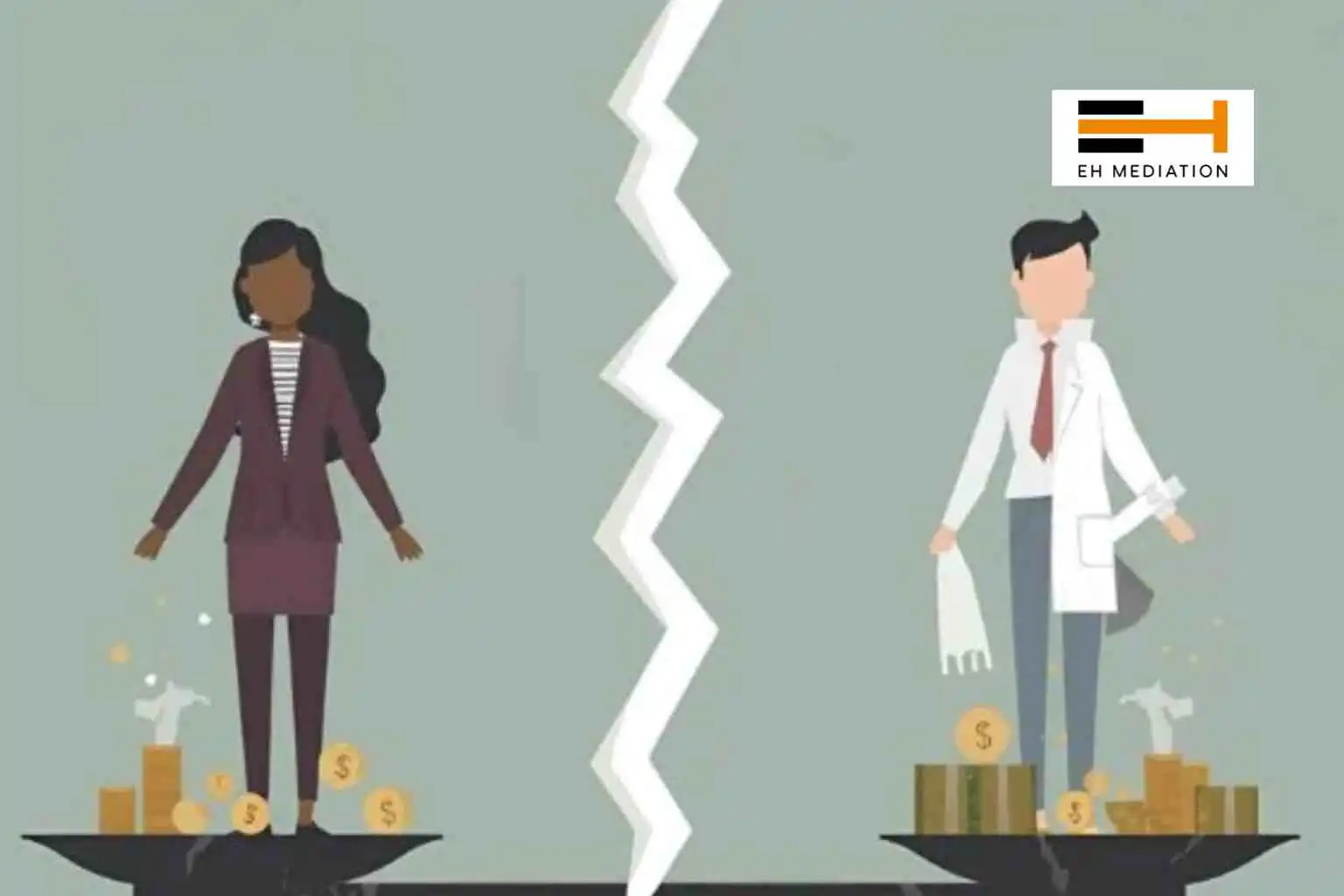
How Can Mediation Help Couples Deal With a Joint Mortgage After Separation?
A joint mortgage is often one of the biggest financial concerns for separating couples.
Unlike smaller household expenses, a mortgage usually involves a significant long-term commitment, which means decisions about the property cannot always be made quickly.
Couples may need to consider questions such as:
- Should the property be sold?
- Can one person afford to take over the mortgage?
- Should both people continue contributing for a period of time?
- What housing arrangements are realistic for each person?
Through family mediation, couples can discuss their options in a calmer setting. This may include looking at:
- Each person’s financial position
- Whether keeping the property is realistic
- Possible housing arrangements
- How mortgage payments will be managed in the meantime
A mediator does not decide whether the house should be sold or who should keep it. Instead, they help both people understand the options available and have a productive conversation about what happens next.
Having this discussion with support can make it easier to move away from conflict and focus on finding a realistic solution.
How Do We Handle Hidden Debts or Financial Information During Family Mediation?
A lack of financial information Gloucester can often make separation more difficult.
Many people worry that they do not have a complete picture of their shared finances. They may be concerned about unknown debts, unpaid bills, or financial commitments they were not aware of. Mediation vs Court: Unpacking the Cost-Effectiveness for Families
For example, someone may wonder:
- Are there debts I do not know about?
- Have all financial responsibilities been disclosed?
- Will unexpected payments appear in the future?
For mediation to be useful, both people need to be open about their current financial position and provide the information needed to understand what debts and commitments exist.
This may include discussing:
- Debts that are still outstanding
- Payments that need to be made
- Financial paperwork relating to shared commitments
- Who has been paying for specific expenses?
- How future costs will be managed?
Understanding the full financial situation can help both people know where they stand and reduce disagreements later.
At EH Mediation Gloucester, the focus is on helping couples communicate clearly and make decisions based on accurate information rather than assumptions.

Can Family Mediation Help Us Avoid Court Over Financial Disputes?
When couples cannot agree about money after separation, court proceedings can sometimes seem like the only option.
However, going to court can be a lengthy, stressful, and expensive process. It also means decisions about your finances may ultimately be made by someone else.
Many separating couples choose to explore mediation because it allows them to stay involved in the decision-making process.
Family mediation Gloucester gives couples the opportunity to:
- Talk through financial issues in a calm and structured environment
- Listen to and understand each other’s perspective
- Explore practical ways to resolve disagreements
- Keep conflict to a minimum
- Reach financial arrangements that reflect their individual circumstances
Mediation can help when couples are struggling to discuss finances calmly but want to find a way forward together. The Hidden Costs of Avoiding Mediation: Unpacking the Consequences of Non-Participation
At EH Mediation Gloucester, the aim is to help couples resolve financial issues wherever possible without the added stress of a court dispute.
What Agreement Can We Reach About Joint Debts and Shared Liabilities Through Mediation?
Every separation is different, and there is no single approach that works for everyone.
The best way forward will depend on your own situation, including your finances, the debts involved, and what each person needs after separation.
Through family mediation, couples may be able to agree on:
- How joint debts will be managed?
- Who will take responsibility for specific payments?
- How household costs will be covered
- What happens with property-related debts
- How future financial arrangements will work
The benefit of reaching an agreement through mediation is that both people have had the opportunity to share their views and consider the options available.
Rather than leaving financial decisions unresolved, mediation helps separating couples create a clearer plan for the future.
At EH Mediation Gloucester, experienced family mediators support couples through difficult financial discussions and help them focus on finding arrangements that are workable, realistic, and respectful.

Frequently Asked Questions
Q: My former partner says they should not have to pay towards certain debts. How can we resolve this?
Money disagreements can become difficult when both people feel they have contributed differently during the relationship. Mediation allows you to discuss your concerns, explain your position, and consider how the debts can be managed based on your individual circumstances.
Q: Can mediation help us decide what happens to our joint mortgage?
Yes. Deciding what happens to a jointly owned home can be a difficult part of separation. Through mediation, couples can talk through their choices, whether that means selling the property, one person staying in the home, or agreeing how mortgage payments will be managed during the transition. The mediator’s role is to support the conversation and help you explore your options, not decide the outcome.
Q: We disagree about who should pay certain debts. Can family mediation help Gloucester?
Yes. Mediation can help you both talk through the debts, why there is a disagreement, and what each person feels is fair. It gives you the chance to look at the situation together and agree on a way forward.
Q: Do we have to go to court if we cannot agree about our finances?
Not necessarily. Many couples choose to try family mediation before considering court proceedings. Mediation allows you both to discuss the issues directly with professional support and gives you the opportunity to find an agreement that works for your situation. If an agreement cannot be reached, you can then consider what other options may be available.
Q: What if I think my ex-partner has not been honest about debts or finances Gloucester?
Financial uncertainty can make separation much more stressful. If you are worried that you do not have a complete picture of your shared finances, this can be discussed during mediation. Both people can review the information available, raise concerns, and work towards having a clearer understanding of the debts and responsibilities involved.
Q: Is family mediation cheaper and less stressful than dealing with financial disputes through court?
For many couples, mediation can be a simpler way to deal with financial disagreements. It gives both people the opportunity to discuss their concerns directly and try to reach an agreement without the time, cost, and pressure of going to court.
For Further Information Please Contact Us